With millions of students using generative AI in schools across America to do their work for them, questions about the negative effects of AI are more prevalent than ever. Here at the high school, students and teachers acknowledge the problems – as well as potential benefits – of using this controversial technology in education.
While a number of students said that AI has helped them with academic tasks, they also acknowledge it is probably bad for them to use in school. This echoes a recent survey by the RAND Corp, which found that 65% of high school students are concerned that using AI is harming their critical thinking skills.
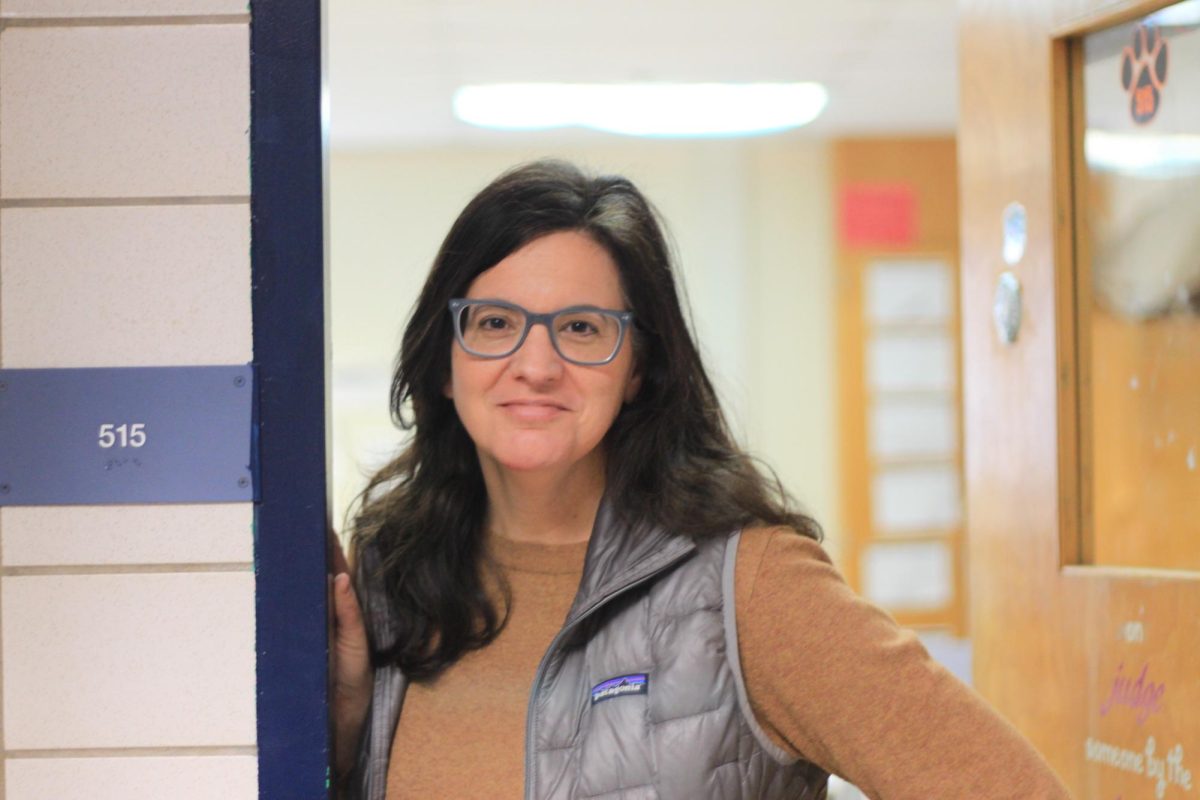
English teacher Kristen Hamilton has seen this struggle play out with her students. On one hand, the use of AI can appear as an attractive time saver, yet on the other, it doesn’t replace learning and can actually hinder students who choose not to do their own work.
For Hamilton, it’s a question of ensuring the assessments teachers use are accurate measures of what students know and can do. This sentiment is echoed by science teacher Matthew Benoit.
“We can have computers do crazy calculations that maybe we can’t do in our head. But at the same time, how is that gonna affect our own brain?” asked Benoit. “If we’re not using our brains, are we developing ourselves?”
While AI can appear to be a shortcut to fast-tracking assignments, more often than not it ends up interfering with students’ ability to learn. With many students saying they use AI for homework, assignments, and essays, their teachers in turn are on the lookout, concerned that students will use AI and submit work that is not their own.
This problem is compounded when teachers use AI for grading, which almost encourages students to use it more often because they know their work isn’t going to be read by a real person. In this scenario, “school” becomes a transaction between computers.
Some students are concerned about how AI could affect the future of learning, college acceptances, and the workplace.
“[AI] could skew who gets into college and who doesn’t,” said sophomore Lila Grace Shraideh.
Shraideh also noted concern about the future availability of jobs as employers begin to incorporate AI more and more into their workplaces. “People who deserve to be in specific professions might not actually get to be there because a computer has taken their job.”